

Do extraction fans stop bin room odour?
Extraction fans move the foul-smelling air from one location to another, causing complaints to follow. They don't deal with the source: the air they pull across the bins picks up odour on the way, so the smell can spread further, not less.
The fan pulls air across the bins, and moving air picks up more odour from the garbage.
Odour rises from the bins.
What an extraction fan does
- An extraction fan draws air out of the room, often to the outside.
- An extraction fan removes some odorous air, and is often required for ventilation.
- The fan runs quietly in the background once installed.
Why the odour comes back
- The fan pulls air across the bins, and moving air picks up more odour from the garbage.
- The odour spreads through the room and into the chute on the way to the fan.
- The bins keep producing odour, so the fan is always chasing the odour.
What works instead
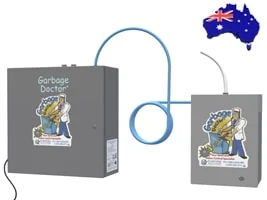
The Garbage Doctor® neutralises the odour at the source, without masking the odour. UV lamps inside the machine turn a little of the air's oxygen into ozone, and PVC conduit targets the ozone as close as possible to the odour sources, such as the bins and the inside of the chute, 24/7. There's nothing to refill, and the ongoing maintenance is very low.

Questions
Should we turn our extraction fan off?
If your building needs the fan for ventilation, or the fan is required, leave the fan running. The Garbage Doctor is designed to work with or without ventilation running. You may also have ventilation requirements of your own, separate from odour control.
Does the fan affect where the conduit goes?
Yes, a fan can, as the airflow can carry the ozone away before the ozone reaches the bins. Our technicians take the airflow into account when they place the conduit, and you are welcome to send us photos of the room, including the fan, first.
Would a bigger fan fix the smell?
Typically not. Extraction fans do nothing to address the source of the odour. More airflow over the bins can make more of the odours airborne, so they spread further and faster through the building, shifting the problem from one place to another.